Upskilling stories
Spark and Icehouse will run free nationwide AI and productivity workshops to help New Zealand SMEs lift performance and overcome tech barriers.
SkillsVR launches EVA, an AI assistant unifying VR, mobile and web training with real-time learner guidance and automatic record tracking.
AI workloads are set to outstrip data centre capacity by 2027, as power constraints and skills shortages threaten expansion plans.
DXC opens a central London Customer Experience Centre to co-create AI and automation solutions with clients and expand its UK presence.
Skillsoft launches an AI-ready Percipio platform that unifies learning and skills management as employers race to keep pace with job changes.
Skillsoft launches an AI-driven Percipio upgrade to map, measure and manage workforce skills as employers race to keep pace with change.
Industry voices are divided on whether AI will diminish consulting roles or augment them by shifting the nature of the work.
Misaligned expectations over workplace AI risk costing UK employers up to GBP £60 billion a year in lost productivity and savings.
AI dominates Scottish boardroom talk, yet most organisations still lack clear strategies or ownership to turn enthusiasm into action.
QA becomes an official NVIDIA training partner and launches a 19‑month Level 6 AI Engineer apprenticeship to tackle UK AI skills gaps.
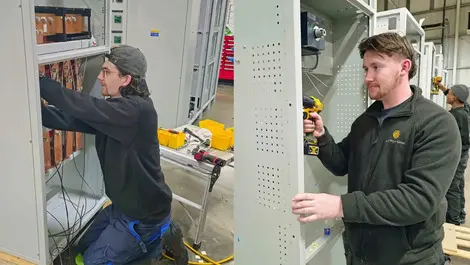
NG Bailey will recruit over 70 apprentices across the UK, offering roles in engineering, building services, facilities and IT.
Addison Lee is training staff in AI and data with Multiverse to cut dead mileage, sharpen forecasting and boost London fleet efficiency.
Google will expand AI R&D, cloud engineering, health projects and skills training in Singapore, deepening a USD $5 billion tech presence.
Malaysia banks on AI, chips and data centres to sustain 4-5% growth in 2026, as SME adoption and workforce skills emerge as key tests.
AI tools save hours at work but Workday finds nearly 40% of those gains are wiped out as staff redo, check and correct low-quality outputs.
Prism Power lifts apprentices to over 10% of staff as it tackles a deepening skills shortage in the UK's critical power sector.
Commonwealth Bank unveils a responsible AI blueprint, detailing governance, safeguards and fraud controls as scrutiny of automation grows.
Canada distils record public input into priorities for a 2026 AI strategy, balancing innovation, security, sovereignty and public trust.
UK firms told to overhaul SAP hiring, prioritising skills, learning and well-being as talent shortages deepen and candidates gain leverage.
Confident but undertrained, UK staff are embracing AI tools at work despite patchy strategies, rollout plans and formal learning support.